
PFAS in Central Florida Drinking Water: A Comprehensive Guide for Residents
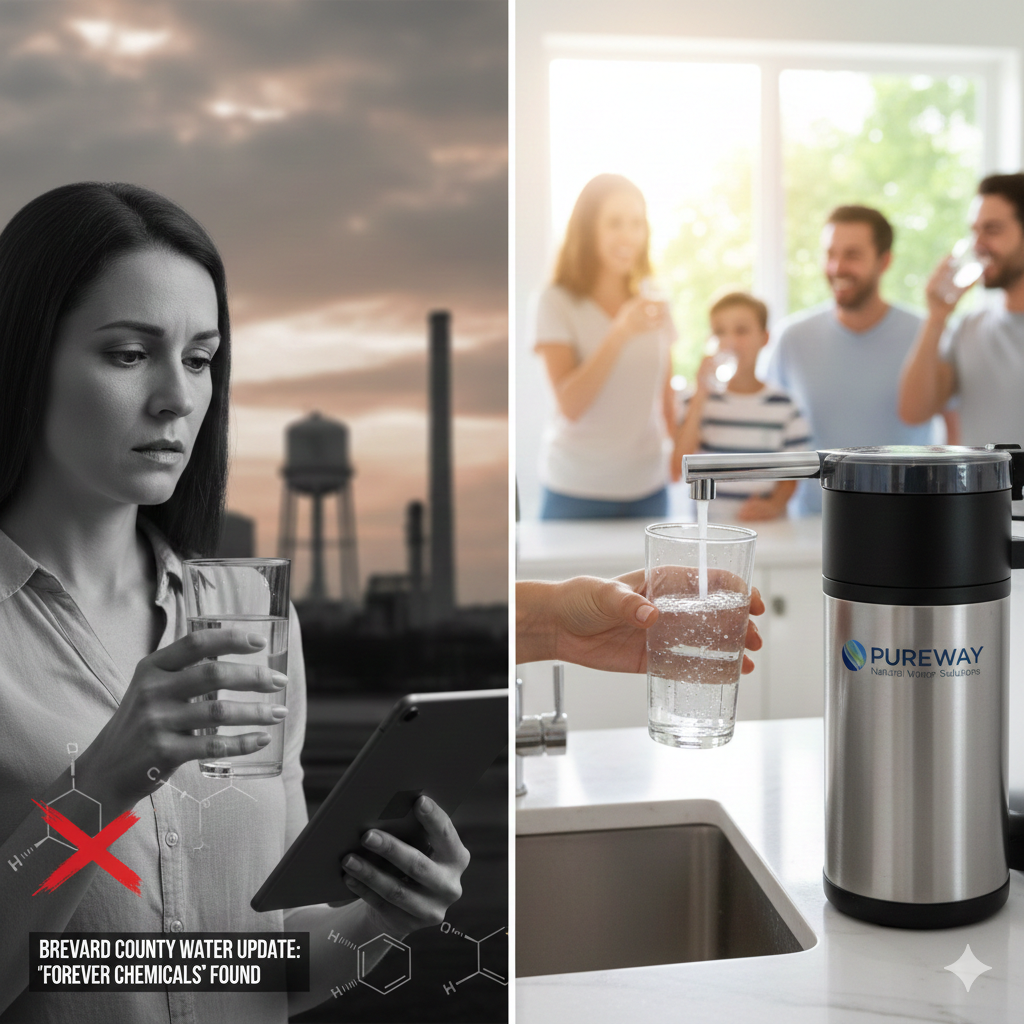
In today's landscape, trust in your local tap water is no longer a given. Recent investigations have brought a startling reality to the forefront for residents of Brevard County: the presence of "forever chemicals"—scientifically known as PFAS—has been confirmed at levels exceeding safety guidelines in several local water systems.
At Natural Water Solutions by Pureway, our mission is to provide more than just filtration; we provide peace of mind. As a Daytona-based company, we see firsthand how the environmental challenges of our neighbors in Brevard and Volusia counties affect everyday lives.
This comprehensive guide breaks down the latest findings in Brevard County, explains why these chemicals are so dangerous, and explores how you can protect your family using advanced technologies like Reverse Osmosis.
The Breaking News: PFAS Contamination in Brevard County
In early 2026, local news outlets and environmental reports confirmed a troubling development for Brevard County residents. Sampling conducted at the Mims Water Treatment Plant in the north and the Barefoot Bay system in the south revealed concentrations of PFAS (Per- and Polyfluoroalkyl Substances) that exceed the Environmental Protection Agency’s (EPA) maximum contaminant levels.
What Exactly Was Found?
While the EPA has set a rigorous safety standard of 4 parts per trillion (ppt) for the most common types of PFAS (PFOA and PFOS), recent "grab samples" from Brevard’s infrastructure showed levels pushing past this threshold.
Brevard County officials, including County Commissioner Katie Delaney, have been vocal about the findings. During public meetings, the message was clear: while a single glass of water may not cause immediate illness, the long-term, cumulative exposure—drinking this water for 10 or 20 years—poses a significant risk to human health.
The Source of the Problem
Brevard County is home to significant military and aerospace infrastructure, including Patrick Space Force Base and Cape Canaveral. For decades, these facilities—like many across the country—used Aqueous Film-Forming Foam (AFFF) for fire suppression training. This foam is heavily laden with PFAS. Because these chemicals are designed to be "indestructible," they don't break down in the soil. Instead, they seep into the Floridan Aquifer, the primary source of our drinking water.
What Are "Forever Chemicals" (PFAS)?
PFAS are a group of man-made chemicals that have been used since the 1940s in a staggering array of consumer products. You can find them in:
Non-stick cookware (Teflon)
Water-repellent clothing and umbrellas
Stain-resistant carpets and upholstery
Grease-resistant food packaging (like pizza boxes and microwave popcorn bags)
The nickname "Forever Chemicals" comes from the incredibly strong carbon-fluorine bond. This bond is one of the strongest in organic chemistry, meaning these chemicals do not degrade naturally. Once they enter the environment—or your body—they stay there.
The Health Risks: Why 4 Parts Per Trillion Matters
To put "4 parts per trillion" into perspective, it is the equivalent of four grains of sugar in an Olympic-sized swimming pool. The fact that the EPA regulates such a tiny amount tells you everything you need to know about the toxicity of these substances.
According to the CDC and the EPA, prolonged exposure to PFAS is linked to:
Increased Cancer Risk: Specifically kidney, testicular, and prostate cancers.
Organ Damage: PFAS are known to cause liver damage and elevated cholesterol levels.
Immune System Suppression: Exposure can reduce the effectiveness of vaccines and make individuals more susceptible to infections.
Developmental Issues: High levels of PFAS in pregnant women are linked to low birth weight and developmental delays in children.
Thyroid & Hormonal Disruptions: These chemicals act as endocrine disruptors, interfering with the body's natural hormones.
The Gap Between Detection and Solution
The biggest concern for Brevard residents right now isn't just the presence of the chemicals—it’s the timeline for a fix.
The county has announced plans to implement Reverse Osmosis (RO) systems at their water treatment plants. This is widely considered the "gold standard" for removing PFAS. However, the infrastructure required to build and maintain an industrial-scale RO plant is massive. Estimates suggest it could take two to five years before these systems are fully operational.
The question for homeowners remains: What do we do in the meantime?
As Commissioner Delaney noted in recent reports, the current recommendation for concerned residents is to take water safety into their own hands by installing high-quality home filtration systems.
Why Standard Filters Aren't Enough
Many homeowners believe that a simple carbon pitcher filter or a refrigerator filter is enough to keep their family safe. Unfortunately, when it comes to PFAS, these basic solutions often fall short.
PFAS molecules are incredibly small and resilient. While high-quality activated carbon filters can reduce some PFAS, they often reach their capacity quickly. If the filter isn't changed exactly on time, the trapped chemicals can actually "break through" in higher concentrations.
The Power of Reverse Osmosis (RO)
At Natural Water Solutions by Pureway, we specialize in Reverse Osmosis systems because they are the only technology proven to consistently remove up to 99% of PFAS, along with lead, nitrates, and pharmaceuticals.
How RO Works: Reverse Osmosis forces water through a semi-permeable membrane with microscopic pores. These pores are so small that they allow water molecules to pass through while blocking larger, more complex molecules—including the carbon-fluorine chains of PFAS.
For a homeowner in Mims or Barefoot Bay, an under-sink RO system provides a dedicated tap for pure, "forever-chemical-free" drinking and cooking water.
Protecting the Daytona and Brevard Communities
While the news highlights Brevard County, the reality is that water doesn't respect county lines. The Floridan Aquifer is a shared resource. At Pureway of Daytona, we encourage all Central Florida residents—from New Smyrna Beach to Titusville—to be proactive.
Steps You Can Take Today:
Test Your Water: Knowledge is power. We offer professional water testing to identify exactly what is coming out of your tap.
Review the Annual Water Quality Report: Every utility is required to provide a Consumer Confidence Report (CCR). Look specifically for "Unregulated Contaminant" sections where PFAS are often listed.
Invest in a Whole-Home Solution: Beyond drinking water, PFAS can be absorbed through the skin or inhaled via steam in the shower. A whole-home filtration system combined with a point-of-use RO system offers the highest level of protection.
Pureway’s Commitment to Natural Water Solutions
We believe that water should be as nature intended: clean, life-giving, and free of synthetic toxins. The "forever chemical" crisis is a wake-up call that the infrastructure of the past isn't equipped to handle the chemicals of the future.
By choosing Natural Water Solutions by Pureway, you aren't just buying a filter; you are partnering with local experts who understand Florida’s unique water challenges. We use the latest technology to ensure that your home becomes a sanctuary against environmental contamination.
Conclusion: Don't Wait for the County to Act
The recent discoveries in Brevard County are a reminder that environmental safety is often a "do-it-yourself" endeavor. While we applaud the county for their transparency and their long-term plans for Reverse Osmosis, your family’s health cannot wait five years for a construction project to finish.
Take control of your water today. Whether you are in Daytona, Mims, or Melbourne, Natural Water Solutions by Pureway is here to help you navigate these challenges with clear, honest, and effective water treatment strategies.
Ready to protect your home from PFAS? Visit us at www.purewayofdaytona.com or call us to schedule a consultation. Let’s make sure "forever chemicals" aren't part of your family's future.