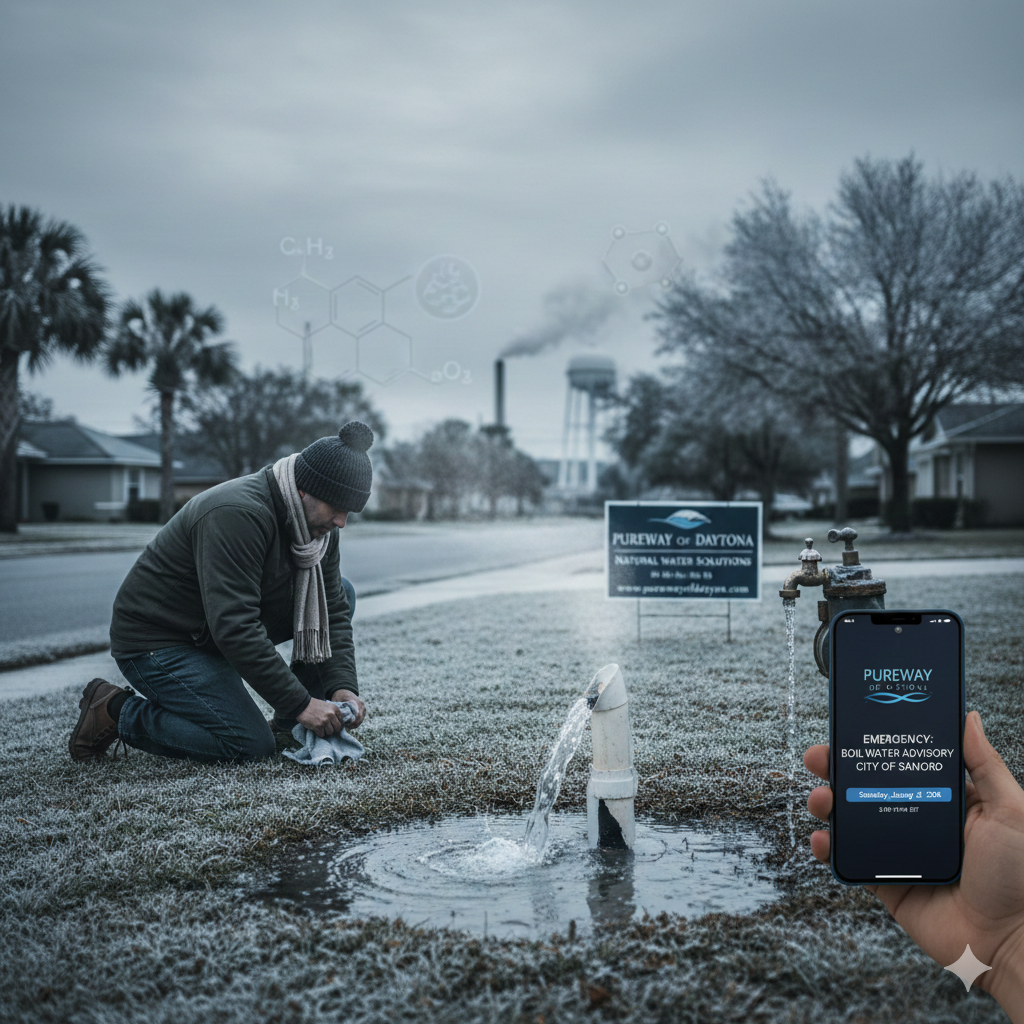
Central Florida Deep Freeze: Record Cold Blasts 2026 Water Infrastructure
Central Florida is currently in the grip of a historic Arctic blast. As of January 30–31, 2026, residents from Orlando to the coast are facing the most significant freeze in over a decade. With wind chills plummeting into the teens and hard freeze warnings in effect, the region’s water infrastructure is at a breaking point.
Beyond the immediate crisis of frozen pipes and boil water notices, this extreme weather event highlights the fragility of a system already struggling with long-term contaminants like PFAS, lead, and disinfection byproducts.
The Immediate Crisis: Arctic Air vs. Florida Plumbing
Unlike the northern U.S., Central Florida’s homes and municipal lines are rarely insulated for sustained sub-freezing temperatures. The current "extreme cold warning" has turned residential plumbing into a liability.
Frozen and Burst Pipes (Today’s Risk)
As water freezes inside pipes, it expands with incredible force. In Florida, where water lines are often tucked into uninsulated exterior walls or run through shallow ground, the risk is severe.
• The Pressure Trap: It isn't the ice itself that usually bursts the pipe, but the pressure buildup between the ice blockade and the closed faucet.
• Vulnerable Areas: Pipes located in garages, attics, and kitchen cabinets facing the outside are the primary "danger zones" during this January 30–31 window.
Emergency Boil Water Notices
When pipes burst—whether in a home or a major city main—water pressure drops. This loss of pressure can allow environmental bacteria to enter the drinking water system.
• Active Alerts: Cities like Ocala and Sanford have already issued precautionary boil water notices following infrastructure failures this week.
• What to Do: If your neighborhood is under an advisory, you must bring all water to a rolling boil for at least one minute before drinking, cooking, or brushing your teeth.
Long-Term Silent Threats: PFAS, Lead, and DBPs
While the freeze is a temporary emergency, it exposes a system already burdened by invisible chemical risks.
1. The PFAS "Forever Chemical" Problem
Per- and polyfluoroalkyl substances (PFAS) are a major concern in 2026. These synthetic chemicals, used in firefighting foams at local airports and military bases, have seeped into the Floridan Aquifer.
• The Status: Recent EPA data shows that 34% of Florida’s tested water systems detected PFAS above federal limits. While cities like Sanford have received millions in settlement funds to begin upgrades, full filtration is still years away for many.
2. Lead Contamination
In historic areas of Central Florida, lead remains a risk not from the source water, but from the aging service lines and older brass fixtures that connect homes to the grid. The stress of the freeze can sometimes dislodge particulates in older pipes, temporarily increasing lead levels.
3. Disinfection Byproducts (DBPs)
To keep water "safe" from bacteria, utilities use heavy chlorination. In Florida’s organic-rich environment, this creates Trihalomethanes (TTHMs). Long-term exposure to these byproducts is linked to chronic health issues, including increased cancer risks.
How to Protect Your Home and Health Today
Immediate Freeze Protection
To prevent your pipes from becoming part of the current disaster, follow these steps immediately:
• The Slow Drip: Let a faucet located on an exterior wall drip slowly. This relieves the pressure that causes bursts.
• Open the Cabinets: Let warm indoor air circulate around the pipes under your sinks.
• Outdoor Prep: Disconnect garden hoses and wrap exposed outdoor spigots with towels or foam covers.
Natural Water Solutions by PureWay
For residents looking for a long-term escape from both infrastructure failures and chemical contamination, Natural Water Solutions by PureWay offers a localized answer. Based in the Daytona area, PureWay specializes in medical-grade, eco-friendly filtration systems designed specifically for Central Florida’s unique water chemistry.
PureWay’s "natural water" approach focuses on molecular-level filtration that removes PFAS, lead, and DBPs without the use of harsh chemicals or electricity. By installing a whole-home system, residents can ensure that even when the city infrastructure is stressed by extreme weather, the water inside their home remains pure, safe, and "bottled water quality" at every tap.
You can find more information on securing your home’s water safety at www.purewayofdaytona.com.
Stay Informed
During this 2026 cold snap, information is your most valuable resource. Contact CDS plumbing of leesburg if you need emergency assistance at 352-668-2443 and Check your local city or county utility website every few hours for active Boil Water Notices and Infrastructure Alerts.