
Is Your Well Ready for Hurricane Season? The 2026 Central Florida Homeowner’s Guide
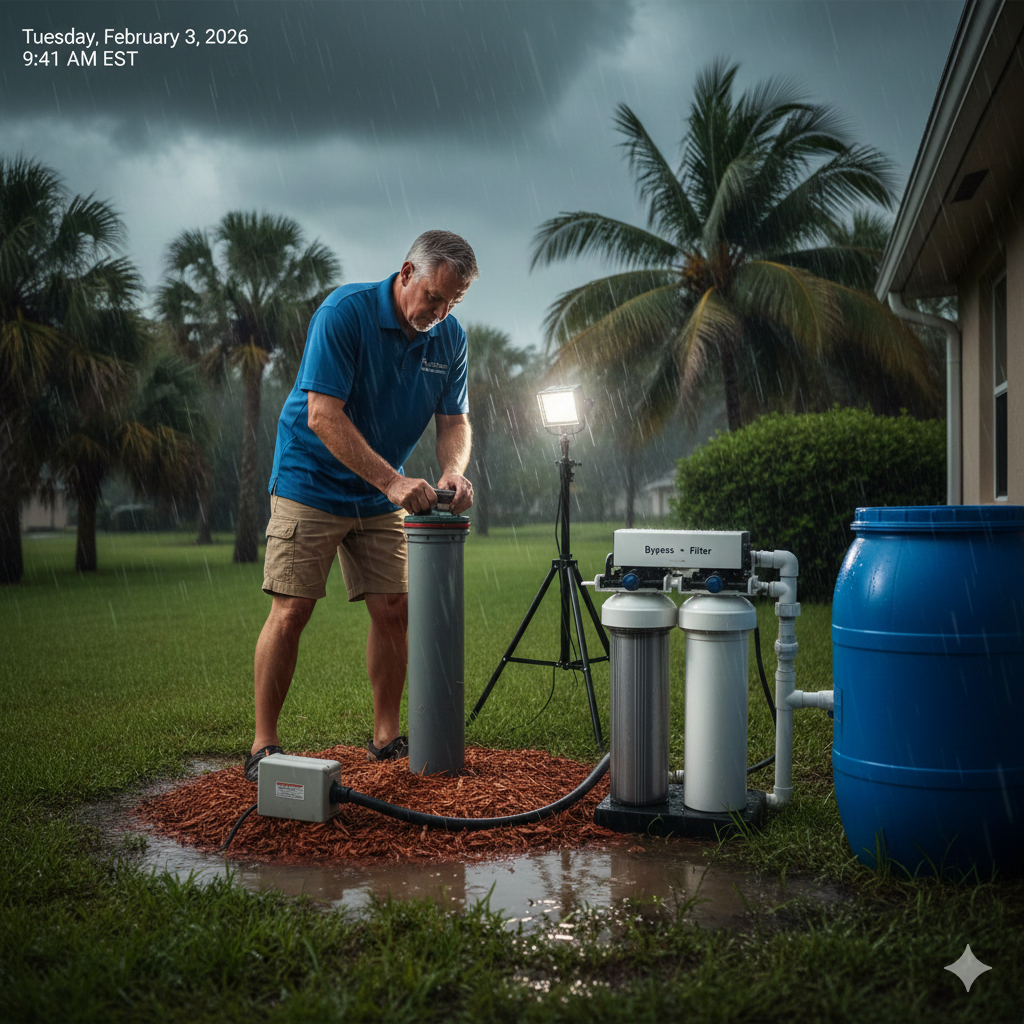
Living in Central Florida—from the rolling hills of Clermont to the coastal plains of Brevard—means acknowledging a simple truth: hurricane season isn't just a date on the calendar; it’s a way of life.
While most residents are diligent about boarding up windows and stocking up on batteries, one of the most critical systems in your home is often the most overlooked: your private well and water filtration system.
As we enter the 2026 storm season, the stakes are higher. With recent shifts in local water tables and increased development across the I-4 corridor, the risk of groundwater contamination during a major storm event has never been more significant. If you rely on a well for your family’s drinking, cooking, and bathing water, "hoping for the best" is not a strategy.
This guide outlines the essential steps to protect your water supply before the clouds gather, how to manage your system during the storm, and the critical "After-Action" steps to ensure your water is safe to drink once the skies clear.
Phase 1: Pre-Storm Preparation (The "Blue Sky" Checklist)
The best time to protect your water system is when the weather is still beautiful. In Central Florida, storm surges aren't the only threat; heavy inland rainfall can cause localized flooding that turns your wellhead into a funnel for bacteria.
1. Inspect Your Wellhead
Take a walk out to your well today. Your well casing should extend at least 12 inches above the ground. If you’ve recently landscaped or added mulch and the casing is now level with the dirt, you are at high risk. During a heavy downpour, "surface runoff"—which carries lawn fertilizers, animal waste, and pesticides—can seep directly into your drinking water.
Action: Ensure the ground slopes away from the wellhead to prevent pooling.
2. Check the Sanitary Seal
Your well cap shouldn't just be "on"; it needs to be watertight. Check for cracks in the casing or gaps in the rubber gasket. In 2026, we recommend "vermin-proof" caps that prevent insects and small rodents from entering the well, as their remains are a leading cause of sudden coliform bacteria spikes after storms.
3. Power Protection
Your well pump is a piece of high-voltage electrical equipment. If you have a whole-home filtration system—such as a water softener, a sulfur air injection system, or a Reverse Osmosis (RO) unit—these have delicate circuit boards.
Action: Invest in a dedicated surge protector for your pump control box. If you use a portable generator, ensure you have the correct transfer switch installed by a licensed electrician to avoid "backfeeding," which can fry your pump motor.
Phase 2: When the Warning Hits (24–48 Hours Out)
When the National Hurricane Center puts Central Florida in the "cone of uncertainty," it’s time to execute your water safety plan.
1. Fill Your Reservoirs
Don't just buy bottled water. Clean your bathtub with bleach, rinse it thoroughly, and fill it. This water isn't for drinking; it’s for "flushing." If the power goes out, your well pump stops. By keeping a bucket next to the tub, you can manually pour water into your toilets to force a flush.
2. Bypass Your Filtration System
This is a "pro-tip" many homeowners miss. If you suspect your well might become contaminated by floodwaters, you do not want that "dirty" water running through your expensive water softener or carbon media tanks.
Action: Turn the bypass valve on your filtration system to the "Bypass" position. This keeps the storm-affected water in the pipes and out of your resin beds, saving you hundreds of dollars in repair and cleaning costs later.
3. Turn Off the Power
If you are evacuated or if flooding is imminent, turn off the electricity to your well pump at the main breaker. If the pump is submerged while it's energized, the motor will likely short out and require a full (and expensive) replacement.
Phase 3: The Aftermath (The "Wait and See" Period)
The storm has passed, and your power is back on. Your first instinct might be to take a long, hot shower. Stop. If your wellhead was submerged or if there was significant standing water in your yard, you must assume your water is contaminated until proven otherwise.
1. The Visual Inspection
Check the area around the well. Is there debris wrapped around the casing? Is the ground eroded? If the electrical components got wet, do not turn the power back on. Call a professional to "meg" the motor (test the insulation) to ensure it’s safe to start.
2. Shock Chlorination
If you suspect contamination, the system needs to be disinfected. This involves pouring a specific concentration of chlorine bleach directly into the well, running every faucet until you smell bleach, and letting it sit for 12–24 hours.
Note: This is a complex process. Doing it incorrectly can damage your plumbing or fail to kill the bacteria hidden in "dead legs" of your pipework.
3. Professional Water Testing
In 2026, Florida’s groundwater is under more scrutiny than ever. After a storm, the Department of Health often sees a spike in Total Coliform and E. coli in private wells.
Action: Do not rely on "home kits" from big-box stores for post-storm safety. These kits are often unreliable for detecting low-level bacterial contamination. Use a state-certified lab or a local water filtration expert who can provide a comprehensive analysis.
Why 2026 is Different: Saltwater Intrusion and Runoff
Central Florida’s geography is changing. With increased pumping from the Floridan Aquifer to support our growing population, "drawdown" is occurring. During heavy storm events, the pressure changes can actually encourage saltwater intrusion in coastal counties (like Volusia and Brevard) or "upwelling" of lower-quality, high-sulfur water in inland counties (like Polk and Orange).
Furthermore, the 2026 Florida water standards have highlighted the presence of "forever chemicals" (PFAS) and nitrates that become more mobile during flood events. A storm is often the "trigger" that moves these contaminants from the surface into your drinking water.
Summary Checklist for Central Florida Residents
Pre-Season: Inspect well cap, raise wellhead if necessary, and test your pump’s amp draw.
During Warning: Fill tubs, bypass water softeners, and shut off the pump breaker if flooding occurs.
Post-Storm: Check for physical damage, shock the well if submerged, and always perform a bacteria test before drinking.
How We Can Help
At Natural Water Solutions by Pureway, we’ve been serving the Central Florida community through decades of hurricane seasons. We know the specific challenges of our local geology—from the high iron content in East Orlando to the sulfur issues in Ocala.
Don't wait for the next "Emergency Broadcast" to find out if your water is safe. We offer Pre-Storm System Audits to ensure your seals are tight and your bypass valves are functional.
Would you like us to come out for a 2026 Storm-Ready Inspection? Contact us today to schedule your filtration check-up.