
Ormond Beach Water Alert: The Hidden Dangers in Your Tap as "Toilet-to-Tap" Debates Heat Up
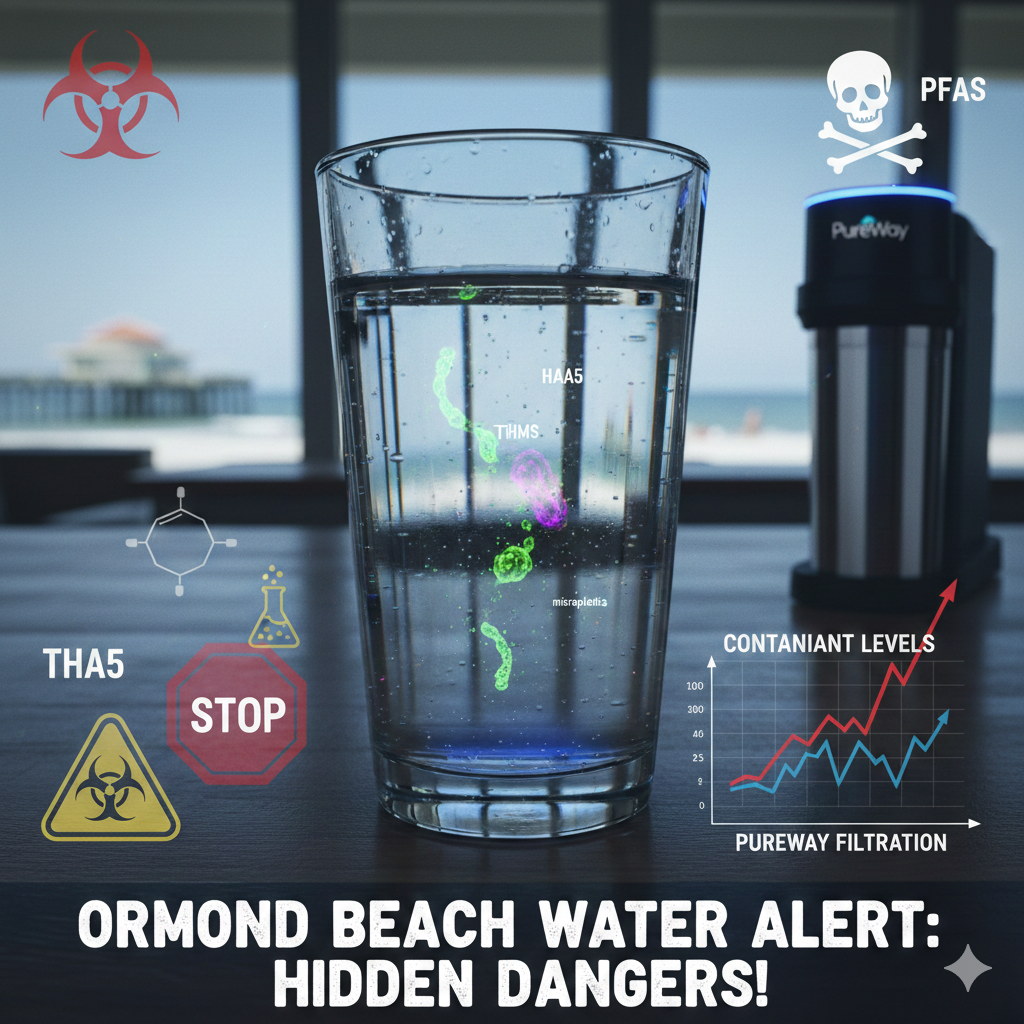
If you live in Ormond Beach, your relationship with your kitchen faucet just got complicated. While the city maintains that its water meets federal safety standards, a series of recent shifts—from the removal of fluoride to the looming "Potable Reuse" (Toilet-to-Tap) controversy—has residents asking: Is our water actually getting cleaner, or just more chemically complex?
As we move through February 2026, here are the three critical dangers currently lurking in the Ormond Beach municipal supply that every homeowner needs to understand.
1. The Disinfectant Dilemma (HAA5 and TTHMs)
To keep water "safe" from bacteria, Ormond Beach uses chlorine. However, when chlorine reacts with organic matter naturally found in Florida’s groundwater, it creates Disinfection Byproducts (DBPs) like Haloacetic Acids (HAA5) and Total Trihalomethanes (TTHMs).
According to independent environmental audits, these byproducts have been detected in the Ormond area at levels significantly higher than what health advocates consider "optimal."
The Danger: Long-term exposure to high levels of TTHMs has been linked to liver and kidney issues and an increased risk of certain cancers.
The Ormond Reality: You may notice a "bleach" smell when you turn on your shower—that’s the disinfectant, but it’s the invisible byproducts that pose the real risk.
2. The PFAS "Forever Chemicals" Factor
In 2026, the EPA’s new strict limits on PFAS (per- and polyfluoroalkyl substances) have put Florida coastal cities under a microscope. These chemicals, used in everything from firefighting foam to non-stick pans, have leached into the Florida aquifer over decades.
Ormond Beach’s water is sourced from groundwater, which is particularly susceptible to these "forever chemicals." Unlike standard minerals, PFAS do not break down in the body; they accumulate, potentially leading to thyroid disruption and immune system issues.
3. The "Toilet-to-Tap" Tension
The biggest headline in Volusia County this week (February 2026) is the County Council’s move to put a "Toilet-to-Tap" ban on the ballot. While Ormond Beach has not yet implemented a potable reuse program, neighboring Daytona Beach has explored these "alternative water sources."
The concern for Ormond residents? Our water systems are interconnected through the aquifer. As the state pushes for "reclaimed water" to solve our 2026 water shortage, the risk of pharmaceuticals, hormones, and microplastics entering the drinking supply increases.
Local Insight: "Legal" limits are set by politicians and budgets. "Pure" limits are set by what’s best for your family's health. There is a wide gap between the two.
Is the 2025 Fluoride Removal Enough?
Last year, Ormond Beach made waves by becoming the first major local city to stop adding fluoride to the water supply, citing neurobehavioral concerns. While many residents cheered this move toward "fewer chemicals," it didn't solve the existing problem of Hard Water and Heavy Metals like Hexavalent Chromium that are still present in local samples.
How to Protect Your Ormond Beach Home
Boiling your water won't remove PFAS or heavy metals—in fact, it can concentrate them. Pitcher filters often miss the microscopic disinfection byproducts that are most concerning in our area.
At PureWay of Daytona, we specialize in the specific "water fingerprint" of Ormond Beach. Our medical-grade, salt-free systems are designed to:
Strip out TTHMs and HAA5 (the chlorine byproducts).
Neutralize PFAS before they reach your glass.
Protect your appliances from the aggressive scale buildup common in Volusia County.
Don’t Wait for a Boil Water Notice
With Speedweeks traffic putting a strain on the city’s pumps right now, water quality can fluctuate daily. Take control of your home’s health today.
[Click Here to Claim Your Free Ormond Beach Water Quality Test & 2026 Health Audit]