
The Silent Decay: How Corroded Pipes Are Poisoning Our Water and Homes
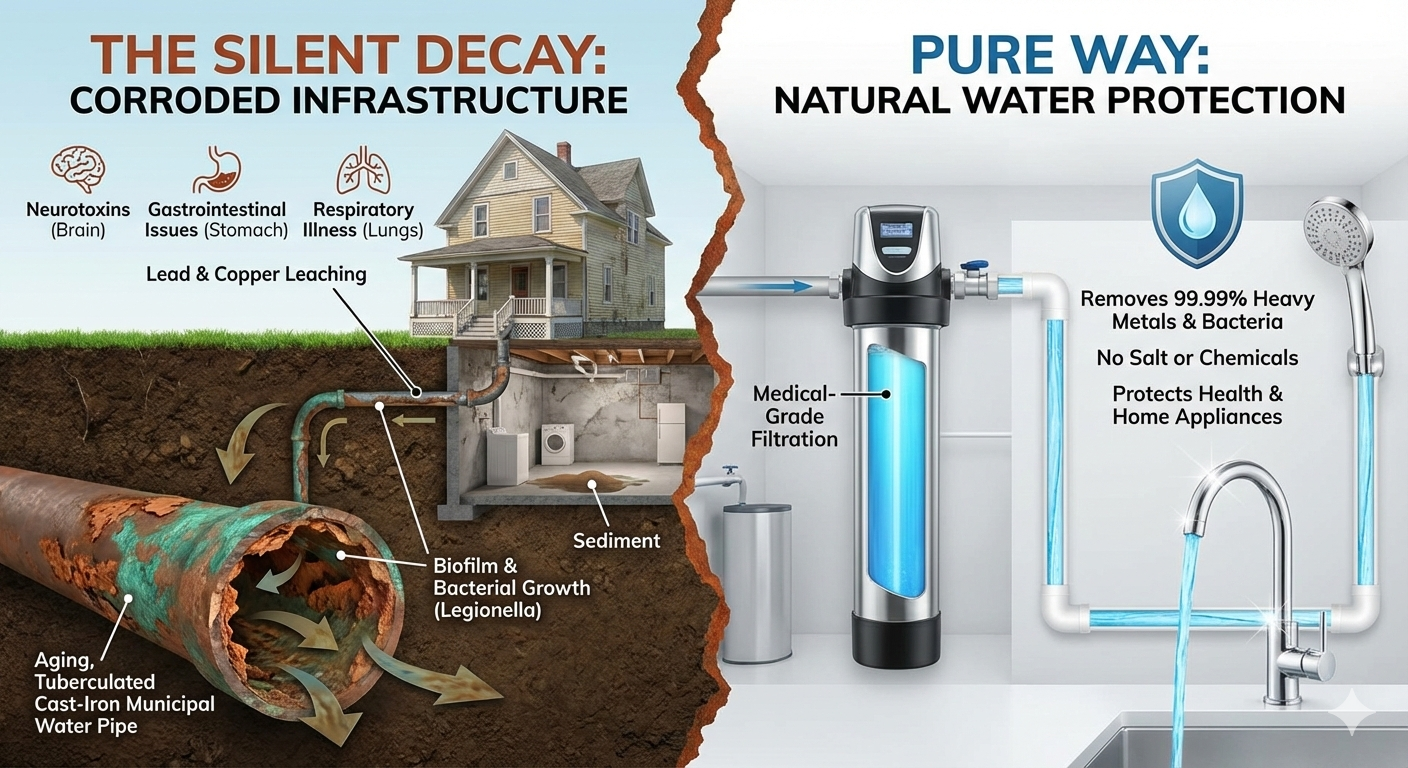
For millions of Americans, the danger isn't lurking in the water source itself—it is hiding in the pipes that bring it to their taps.
America's water infrastructure is aging rapidly, and in many cities, the very veins of the system are corroding. This corrosion is not merely a plumbing nuisance; it is a public health crisis that leaches toxic metals into drinking water, fosters deadly bacteria, and degrades the structural integrity of our homes.
Homes built before 1986 are at particular risk. It was only in that year that the Safe Drinking Water Act was amended to ban the use of lead pipes and solder. However, millions of miles of pre-1986 piping remain in service today, slowly breaking down and releasing a cocktail of toxins into the water supply.
The Mechanics of Toxicity: What Happens When Pipes Corrode?
Corrosion is a chemical reaction that occurs when water pipes react with their environment. This can be triggered by the water's pH, temperature, or the presence of harsh chemical disinfectants like chlorine. As the inner walls of metal pipes flake and dissolve, they release their chemical makeup—often Lead and Copper—directly into the water flow.Furthermore, the rough, rusted surfaces of corroded pipes create the perfect breeding ground for biofilm, a sticky layer that harbors dangerous bacteria.
Key Health Hazards of Corroded Pipes
The health implications of drinking from a corroded system are severe and multifaceted.
1. Lead Poisoning: The Irreversible Neurotoxin
Lead is the most notorious by-product of pipe corrosion. When the protective coating inside older lead pipes or copper pipes with lead solder wears away, lead particles dissolve into the water. According to the CDC, even low levels of lead exposure can cause cognitive damage
Health Impact: Lead is a cumulative toxicant that affects multiple body systems. It is particularly harmful to young children.
Neurological Damage: Even low levels can cause reduced IQ, behavioral changes, and learning disabilities.
Developmental Delays: Exposure in utero or infancy can permanently stunt growth and development.
Organ Failure: In adults, lead is linked to kidney damage, high blood pressure, and cardiovascular disease.
2. Copper Toxicity: The Acute Assailant
While copper is a necessary nutrient in trace amounts, corrosion in copper plumbing (often caused by acidic water) can spike levels to dangerous heights.
Health Impact: High levels of copper act as a gastrointestinal irritant.
Acute Symptoms: Nausea, vomiting, diarrhea, and stomach cramps often occur shortly after ingestion.
Long-term Risks: Chronic exposure can lead to liver and kidney damage.
3. Bacterial Growth (Legionella): The Hidden Infection
Corroded pipes are not smooth; they are pitted and rusted. These irregularities protect bacteria from chlorine disinfectants, allowing them to multiply.
Health Impact: The most dangerous pathogen found in these biofilms is Legionella pneumophila.
Legionnaires' Disease: When water containing this bacteria is aerosolized (e.g., in a shower), it can be inhaled, causing a severe and often fatal form of pneumonia.
4. Iron Overload and Skin Irritation
As galvanized steel pipes corrode, they release iron rust into the water.
Health Impact:
Hemochromatosis: While rare from water alone, individuals with genetic predispositions can suffer from iron overload, leading to organ damage.
Dermatitis: Water heavy in rust and sediment acts as an irritant, stripping natural oils from the skin and causing eczema, inflammation, and itchiness.
5. Respiratory Issues from Mold
Corrosion inevitably leads to leaks. Pin-hole leaks in walls often go undetected for months, creating a damp environment where mold thrives.
Health Impact:
Respiratory Distress: Mold spores trigger asthma attacks, chronic allergies, and respiratory infections, turning the home environment itself into a hazard.
A History of Failure: City Lawsuits and Infrastructure Collapse
The dangers of corroded pipes are not theoretical. They have been the subject of massive class-action lawsuits where negligence and aging infrastructure collided with public health.
The Flint, Michigan Crisis
The most infamous case of corrosion-related poisoning occurred in Flint. When the city switched water sources in 2014, they failed to add anti-corrosive agents. The corrosive river water ate away at the city's aging lead pipes, leaching massive amounts of neurotoxins into the water.
The Fallout: A $641 million settlement was reached for the victims. The corrosion also triggered an outbreak of Legionnaires' disease, killing 12 people—a direct result of low chlorine levels and rust buildup shielding the bacteria.
Newark, New Jersey
In 2018, a lawsuit filed by the Natural Resources Defense Council (NRDC) forced the city of Newark to confront its own crisis. Corrosion control treatments at the water plant failed, causing lead to leach from approximately 18,000 lead service lines across the city. major settlement in Newark
The Fallout: The lawsuit resulted in a mandatory, rapid replacement of lead service lines, proving that chemical band-aids are often insufficient to stop corrosion in aging infrastructure.
Pittsburgh, Pennsylvania
Pittsburgh faced similar legal pressure after lead levels exceeded federal safety limits. The Pittsburgh Water and Sewer Authority (PWSA) reached a $50 million settlement to address lead poisoning risks.
The Issue: The lawsuit highlighted the dangers of "partial line replacements," where disturbing old, corroded pipes during repairs actually knocked more loose lead particulates into the water supply, spiking toxicity levels for residents.
The Solution: Protecting Your Health and Home with Pure Way
Waiting for the city to replace miles of crumbling infrastructure is a gamble with your health. The most effective defense is a Natural Water Solution installed at the point of entry—your home.
Pure Way of Daytona offers advanced, medical-grade filtration systems designed to tackle the specific threats posed by corroded municipal pipes. Here is how these systems save both your health and your home:
1. Saving Your Health: The Medical-Grade Barrier
Unlike standard water softeners that use salt to treat hardness, Pure Way systems use Aqua Shield Technology and Micronguard filtration.
Heavy Metal Removal: These systems are engineered to remove up to 99.99% of heavy metals like lead and copper, ensuring that even if the city pipes are leaching toxins, they never reach your glass.
Bacteria Defense: By removing the sediment and rust that bacteria use for shelter, and filtering out pathogens, the system protects your family from waterborne illnesses like Legionnaires' disease.
Chemical Freedom: Because these systems do not use salt or add chemicals, you avoid the health risks associated with high sodium intake and chemical by-products.
2. Saving Your Home: Stopping the Cycle of Damage
Corroded water doesn't just hurt you; it hurts your house.
Protecting Plumbing: By filtering out the abrasive rust and corrosive chlorine/chloramines before they enter your home’s internal plumbing, Pure Way systems prevent your own pipes from corroding from the inside out. This significantly reduces the risk of pin-hole leaks and the resulting mold growth in your walls.
Appliance Longevity: Sediment and rust from city pipes destroy water heaters, dishwashers, and washing machines. Pure Way acts as a shield, ensuring that only clean, clear water flows through your expensive appliances, extending their lifespan and saving you thousands in replacement costs.
In an era where infrastructure is failing, independence is safety. By installing a Natural Water Solution from Pure Way, you stop the corrosion at your doorstep, ensuring your water is life-sustaining, not life-threatening