
The Ultimate Guide to Whole-RV Water Filtration: Protect Your Health and Your Rig
Looking for the best approach to water filtration in Daytona Beach or while traveling cross-country?
Filtering your water while camping is more than just a luxury—it is an absolute necessity. Discover why a custom whole-house system is the ultimate upgrade for protecting your travel trailer.
The Ultimate Guide to Whole-RV Water Filtration: Protect Your Health and Your Rig
There is a unique sense of freedom that comes with hitching up a camper behind a capable tow vehicle like a 2024 Chevy Colorado Trail Boss and leaving the daily grind behind. Whether you are heading to a luxury RV resort, boondocking in a state park, or simply exploring the beautiful coasts of Central Florida, the RV lifestyle is all about self-sufficiency and comfort.
However, that self-sufficiency heavily relies on one critical resource: water.
While most RV owners spend hours researching tire pressures, payload capacities, and solar setups, the quality of the water flowing into their camper often goes overlooked. Relying on standard campground city water or remote well hookups can be a massive gamble. The solution is not just a cheap blue filter on your hose; the solution is adopting a true "whole house" approach to mobile water treatment.
The Illusion of Clean Campground Water
When you pull into a new campsite and hook up your fresh water hose to the spigot, it is easy to assume the water is safe, clean, and ready to use. Unfortunately, this is frequently not the case. Campground water systems, especially those in rural or heavily wooded areas, often rely on aging well infrastructure. Even parks on municipal water supplies can have older, degraded pipes leading right up to your site's pedestal.
The Environmental Protection Agency (EPA) regulates public water systems, but localized contamination, pipe leaching, and seasonal fluctuations mean that the water quality at the spigot can vary wildly from one week to the next. You might encounter water that looks clear but smells heavily of chlorine, or worse, water that comes out brown, smelling of sulfur, and loaded with sediment.
When you are out exploring, filtering your water while camping is not just a luxury—it is an absolute necessity for maintaining a safe and comfortable living environment inside your mobile home.
Protecting Your Health on the Road
The most critical reason for upgrading your RV’s water system is your family's health. Waterborne pathogens, heavy metals, and chemical contaminants are real threats when moving from one water source to another.
According to the Centers for Disease Control and Prevention (CDC), agricultural runoff, natural mineral deposits, and inadequate local water treatment can introduce harmful bacteria, viruses, and chemicals like lead or arsenic into local water tables.
When you use water inside your camper, you are not just drinking it. You are brushing your teeth, showering, washing your hands, and cooking your meals with it. If you rely on a single under-sink drinking water filter, you are still exposing your skin and lungs (through steam in the shower) to potentially harmful volatile organic compounds (VOCs) and excessive chlorine.
A whole-RV filtration system treats every drop of water before it ever enters your plumbing. By installing a multi-stage system that includes sediment filtration and advanced carbon block technology, you eliminate chlorine tastes and odors, capture harmful cysts, and block volatile chemicals. This ensures that whether you are making a pot of coffee or taking a hot shower after a long day of hiking, your water is pure, safe, and healthy.
Saving Your RV's Plumbing and Appliances
Beyond the immediate health concerns, the water you pump into your rig can wreak havoc on your expensive appliances and plumbing infrastructure.
One of the most common issues RVers face across the United States is hard water. The United States Geological Survey (USGS) notes that a significant portion of the country's groundwater is considered hard or very hard, meaning it contains high levels of dissolved calcium and magnesium.
When hard water is heated—such as in your RV’s hot water heater—it accelerates the formation of scale. This chalky buildup coats the heating elements of your water heater, drastically reducing its efficiency and leading to premature failure. Scale also clogs showerheads, ruins the internal valves of your toilet, and leaves stubborn, crusty spots on your sinks and dishes.
Filtering travel trailers with a comprehensive, whole-house style system provides a barrier against this damage. While traditional water softeners are sometimes used by RVers, advanced filtration systems can incorporate specialized media to prevent scale buildup without the need for heavy bags of salt. By filtering all the water going throughout the camper, you protect your delicate PEX plumbing, extend the life of your water pump, and ensure your water heater runs efficiently for years to come.
Why the "Standard Blue Filter" Isn't Enough
Walk through any campground, and you will see dozens of small, blue inline water filters attached to spigots. While these basic filters are better than nothing, they provide a false sense of security.
Standard inline filters are generally only equipped with a basic granular activated carbon (GAC) filter and a coarse sediment screen. They are designed to catch large particles (like sand or rust) and slightly reduce chlorine taste. However, because water rushes through them so quickly, they lack the necessary contact time to effectively remove heavy metals, microscopic pathogens, or complex chemical contaminants. Furthermore, they do almost nothing to protect your rig's plumbing from hard water scale.
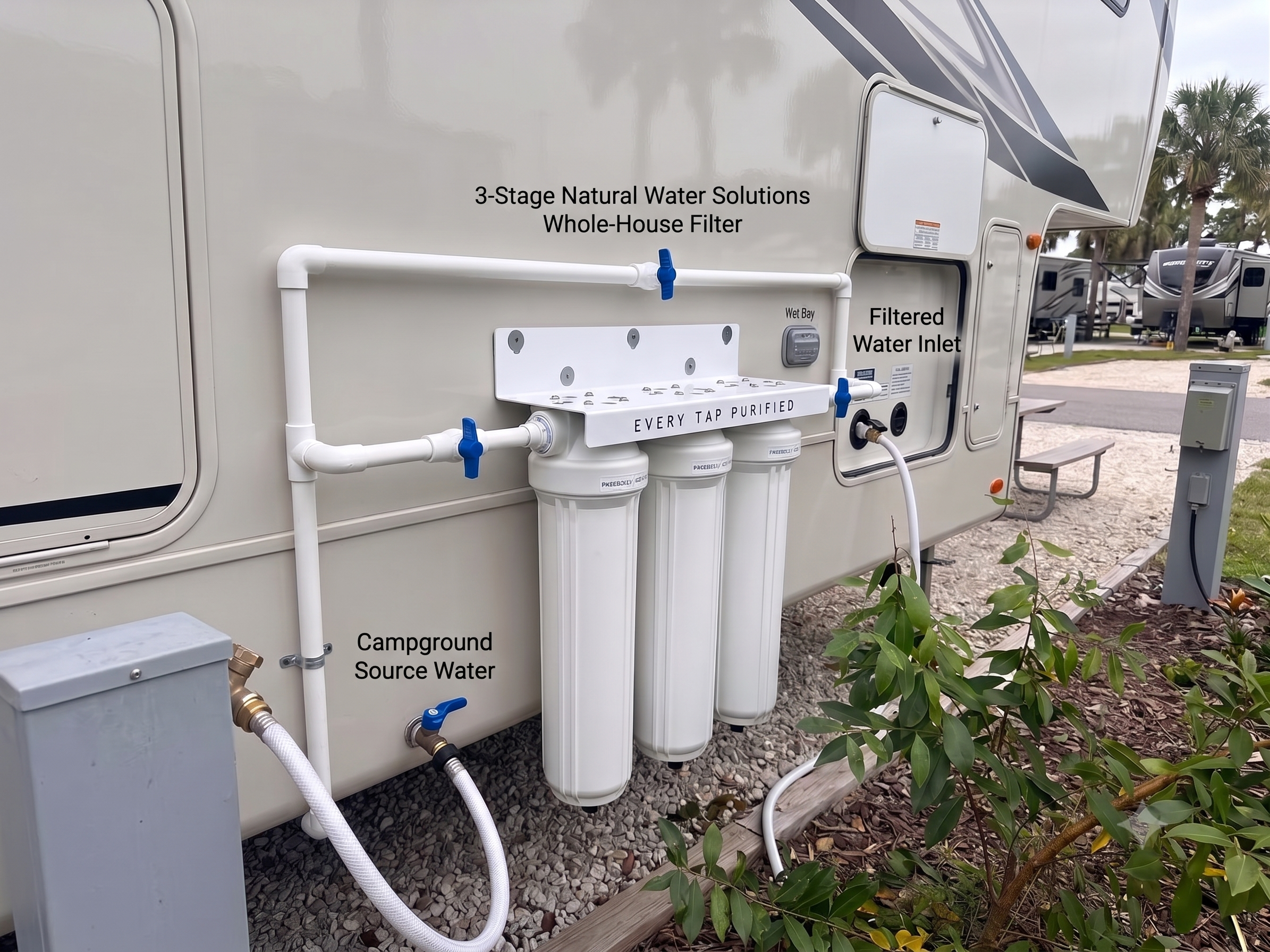
When it comes to comprehensively filtering rvs, you need a system with dedicated stages. A true whole-house setup for an RV typically involves:
Stage 1: A Micron Sediment Filter. This catches the dirt, silt, sand, and rust that often plagues campground wells.
Stage 2: A Dense Carbon Block Filter. This provides the necessary contact time to scrub the water of chlorine, chloramines, VOCs, and foul odors.
Stage 3 (Optional but Recommended): A Sub-Micron or UV Purifier. For those who frequently boondock, adding a heavy-duty sub-micron filter or UV light ensures bacteria and cysts are neutralized.
These systems are typically mounted in the RV’s wet bay or storage compartment, plumbed directly into the main water intake. This guarantees high flow rates and complete protection for the entire vehicle.
Local Expertise for Your Mobile Lifestyle
At PureWay of Daytona, we understand that water quality doesn't just matter at your sticks-and-bricks house; it matters wherever you park your home for the night. We have spent years perfecting residential water treatment, and we are bringing that same level of uncompromising quality to the RV community.
If you are looking for the most reliable water filtration Daytona Beach has to offer, you don't have to look any further than our custom solutions. We specialize in designing and installing robust, high-flow water filtration systems that fit seamlessly into the storage compartments of fifth wheels, Class A motorhomes, and travel trailers.
We know the unique challenges of Florida's hard, often sulfur-heavy water, and we know how to build a mobile system that can handle it—and whatever else you encounter on the road.
Conclusion: Invest in Peace of Mind
Your RV is a major investment designed to bring you joy, relaxation, and adventure. Do not let bad water ruin your trip with a sudden plumbing failure, or worse, make your family sick.
Upgrading to a whole-RV water filtration system ensures that every faucet, shower, and appliance in your camper is supplied with clean, safe, and great-tasting water. It is a proactive step that protects your health, preserves your rig's infrastructure, and provides ultimate peace of mind, no matter where the road takes you.
Ready to upgrade your travel trailer's water system? Visit the rest of our get-educated resources at PureWay of Daytona, or contact us directly to learn how we can outfit your camper with a premium filtration solution before your next big trip.