
How Hard Water is Ruining Appliances in The Villages (And How to Stop It)
Living in The Villages, Florida, offers an unparalleled lifestyle. Between the pristine golf courses, vibrant town squares, and beautiful weather, it is easy to see why so many people choose to call this community home. However, underneath the surface of this idyllic setting lies a silent, hidden problem that is quietly wreaking havoc on homes across Central Florida: hard water.
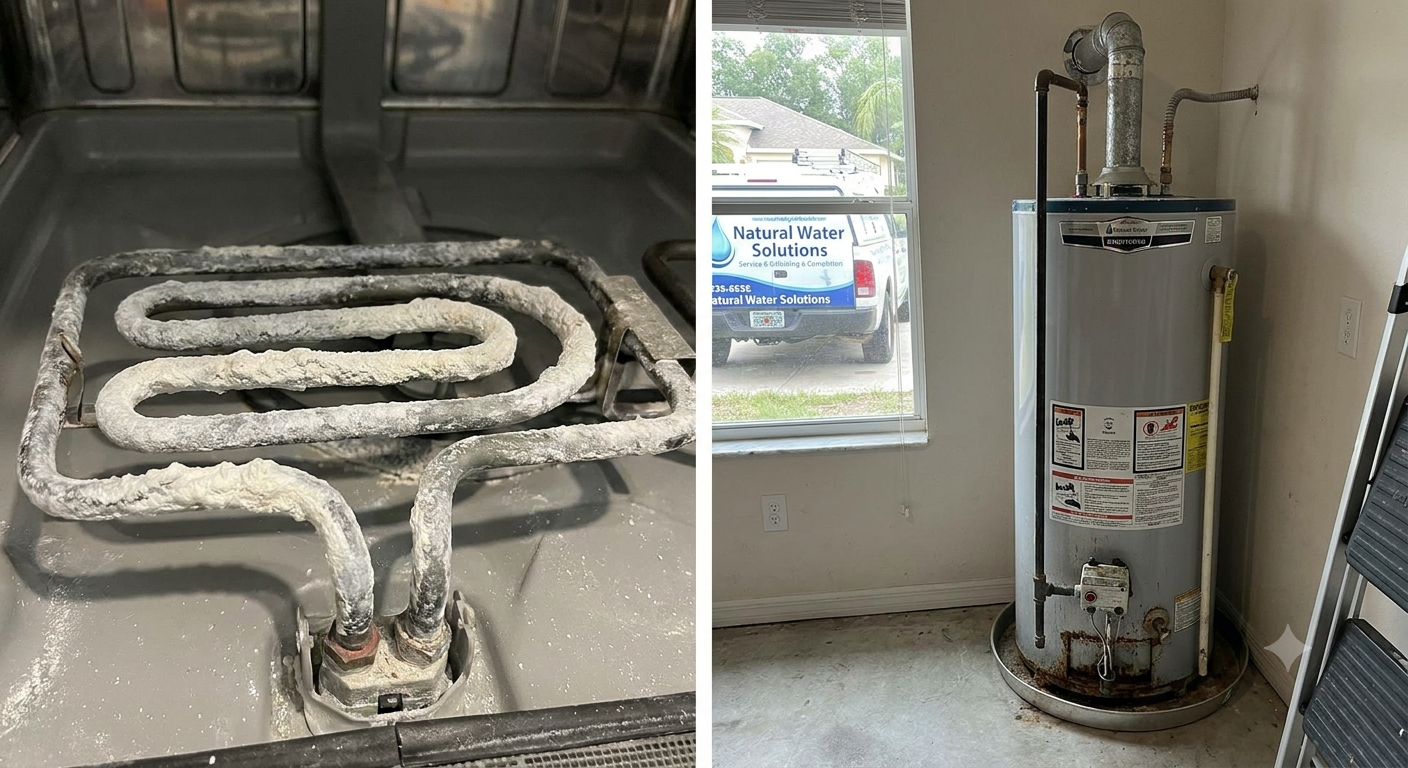
If you have noticed a stubborn, chalky white residue on your showerheads, cloudy glassware straight out of the dishwasher, or skin that feels dry and itchy after a shower, you are already experiencing the symptoms. But the cosmetic annoyances are just the tip of the iceberg.
The real damage is happening out of sight, deep inside your home’s most expensive appliances.
In this comprehensive guide, we are going to break down exactly what hard water is doing to your home in The Villages, the science behind scale buildup, and how investing in professional The Villages water filtration can save you thousands of dollars in premature appliance replacements.
Understanding The Villages Water Quality: What Is Hard Water?
To understand why your appliances are failing prematurely, you first have to understand where your water comes from. The Villages, like much of Central Florida, draws its municipal water supply from the Floridan Aquifer. This underground reservoir is one of the most productive aquifers in the world, but it is heavily composed of porous limestone bedrock.
As groundwater naturally percolates through this limestone, it dissolves high concentrations of calcium and magnesium. These dissolved minerals are what make the water "hard."
According to the U.S. Geological Survey (USGS) water hardness guidelines, water is classified as "hard" when it contains between 121 and 180 milligrams per liter (mg/L) of dissolved minerals, and "very hard" when it exceeds 180 mg/L. Florida’s water routinely falls into the moderately hard to very hard categories. While municipal treatment facilities in The Villages do an excellent job of ensuring the water is microbiologically safe to drink according to Environmental Protection Agency (EPA) standards, they do not remove calcium and magnesium. It is left entirely up to the homeowner to manage these destructive minerals.
The Silent Appliance Killer: How Scale Buildup Works
When hard water enters your home, the calcium and magnesium remain dissolved as long as the water is cold and flowing. The destruction begins the moment that water is heated.
When hard water is heated—which happens continuously in your water heater, dishwasher, and washing machine—a chemical reaction occurs. The heat causes the calcium and magnesium to precipitate out of the water and form calcium carbonate, commonly known as limescale.
This limescale clings to the internal heating elements, pipes, and valves of your appliances. Over time, it hardens into a rock-solid, concrete-like layer. This crust acts as an intense thermal insulator, meaning your appliances have to work twice as hard, running longer cycles and burning more energy just to heat the water through the thick layer of rock.
The Big 3: The Appliances Most at Risk in Your Home
While hard water touches every part of your plumbing system, certain appliances bear the brunt of the damage. Here is how hard water is actively destroying the appliances in your home.
1. Your Water Heater (The Biggest Victim)
Your water heater is the hardest-working appliance in your house, and it is also the most vulnerable to hard water damage. As water is heated in the tank, limescale settles at the bottom, burying the lower heating element.
According to independent studies conducted by the Water Quality Association (WQA), every 1/16th of an inch of scale buildup reduces your water heater's efficiency by up to 11%. Over just a few years, a water heater dealing with untreated Florida hard water can lose up to 29% of its efficiency. Not only does this drastically increase your monthly utility bills, but the trapped heat causes the tank to overheat and eventually rupture. Instead of lasting 12 to 15 years, water heaters in hard water areas often fail in just 5 to 7 years.
2. Dishwashers
If you are constantly pulling cloudy, spotted glasses out of your dishwasher, your appliance is losing the battle against hard water. But the problem goes much deeper than spots. Limescale aggressively attacks the heating element in the base of the dishwasher, causing it to burn out prematurely. Furthermore, calcium deposits clog the tiny jets on the rotating spray arms. When these jets clog, water pressure drops, and your dishes simply do not get clean, forcing you to run second cycles and waste even more water.
3. Washing Machines
Hard water minerals react negatively with laundry detergent. Instead of creating a rich, cleaning lather, calcium and magnesium bind with the soap to form a sticky soap scum (curd). Because the soap cannot dissolve properly, it gets trapped in the fibers of your clothing, making towels feel scratchy and causing fabrics to fade and wear out up to 15% faster. Internally, the scale buildup destroys the washing machine's rubber seals, clogs the intake valves, and coats the heating coils in front-loading machines, leading to expensive service calls and inevitable breakdowns.
Don't Forget the Small Appliances
It isn't just the large appliances at risk. Expensive luxury coffee makers (like Keurigs and espresso machines) and refrigerator ice makers have incredibly narrow internal water lines. Even a microscopic amount of calcium scale will clog these lines, resulting in a machine that refuses to brew or an ice maker that stops producing ice.
The Hidden Financial Costs of Hard Water
Homeowners often hesitate to invest in a water softening system because of the upfront cost, completely unaware of how much hard water is currently taxing their wallets. Living with untreated hard water is incredibly expensive.
Appliance Replacement: Replacing a water heater, dishwasher, and washing machine 50% sooner than expected costs thousands of dollars.
Energy Bills: Because scaled-up appliances run longer and harder, your monthly electricity and gas bills are continuously inflated.
Cleaning Products: Hard water suppresses soap lather. Studies show that households with hard water use up to 50% more laundry detergent, dish soap, shampoo, and body wash just to get a basic clean.
Plumbing Repairs: Scale eventually chokes your home's copper and PEX piping, leading to a loss of household water pressure and requiring expensive professional descaling or pipe replacements.
Industry experts estimate that the hidden cost of living with hard water exceeds $800 annually for the average home.
The Permanent Solution: Whole-Home Water Filtration
Pitchers with carbon filters and refrigerator water dispensers are great for improving taste, but they do absolutely nothing to remove hard water minerals. Chemical descaling liquids and vinegar soaks are only temporary band-aids; they clean the surface but don't stop the scale from immediately returning the next time you turn on the tap.
To protect your home, your appliances, and your wallet, you must stop the minerals before they ever enter your plumbing.
The ultimate solution for residents in The Villages is a professional whole-home water softening and filtration system. By utilizing an ion-exchange process, these systems physically pull the microscopic calcium and magnesium rock out of your water right where it enters your house.
When you upgrade to a specialized system, like our proprietary Spring Path filtration line, you are investing in a complete home defense mechanism. The benefits are immediate:
Your appliances will run at peak factory efficiency and last years longer.
Your skin and hair will feel softer and retain natural moisture.
Showerheads, faucets, and glass shower doors will stay sparkling clean with zero scrubbing.
Your clothes will come out of the laundry looking brighter and feeling softer.
Why Choose Natural Water Solutions?
When it comes to treating Florida's unique water chemistry, you need a local expert who understands the exact mineral composition of the Floridan Aquifer. Big-box store water softeners are often undersized and lack the resin capacity to handle The Villages' continuous hardness levels.
At Natural Water Solutions, we don't just sell generic filters; we engineer specific solutions for Central Florida homes. We offer comprehensive water testing to show you exactly what is in your water, and we professionally install systems guaranteed to eliminate scale, remove chlorine tastes, and protect your home investment.
Stop letting hard water ruin your appliances and drain your bank account.
Contact the local experts today:Natural Water Solutions 📍 603 E Fort King St, Ocala, FL 34471 📞 386-319-2337🌐 Learn more about our Our Filtration Process and book your free water test today.